

INTRODUCTION
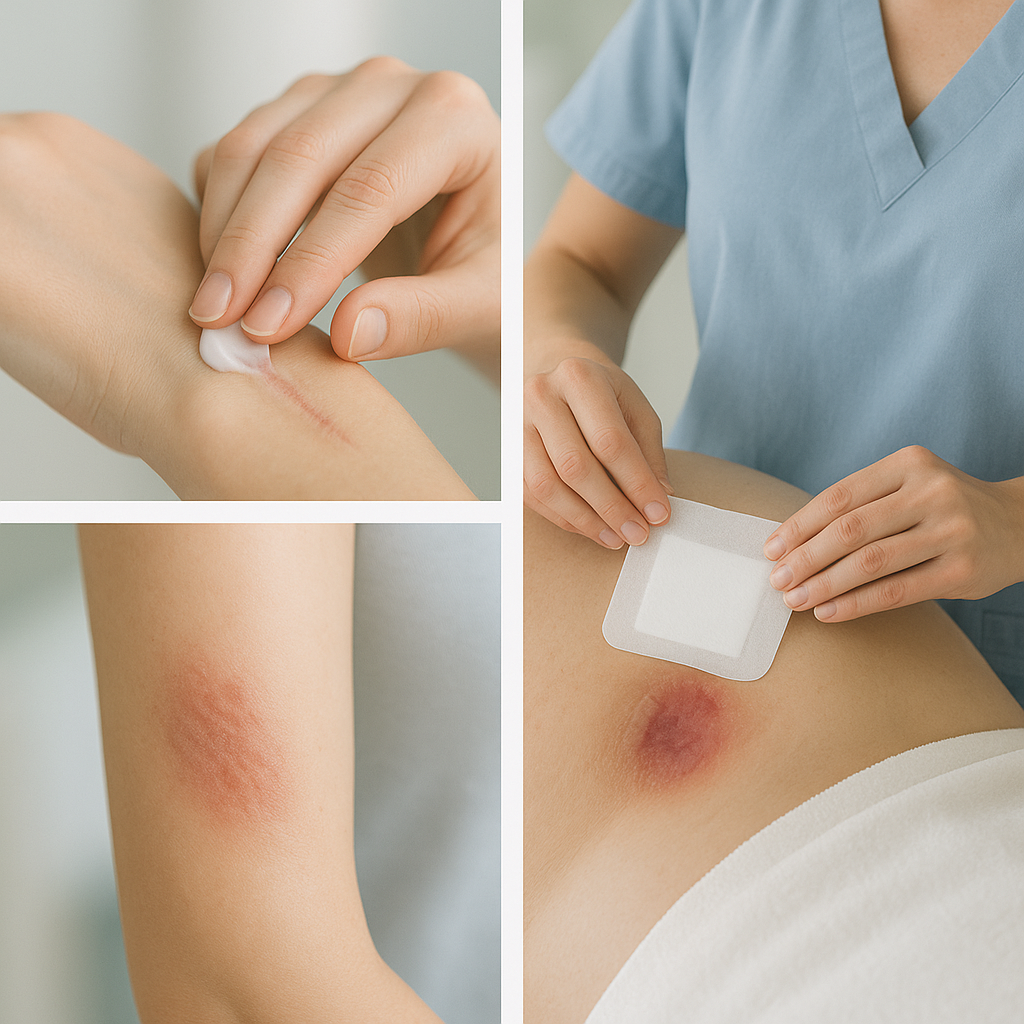
Skin acts as our front‑line barrier, and when it’s injured through cuts, burns, or surgery, a complex wound healing process kicks in. This includes inflammation, proliferation, and remodeling, eventually leading to scar formation. A scar is essentially a replacement tissue, primarily composed of collagen, that restores integrity but often lacks the function and aesthetics of normal skin [2,5]. Understanding the molecular pathways and cellular mechanisms driving scarring especially the pivotal roles of fibroblasts, myofibroblasts, immune cells, and signaling molecules like TGF‑β is key to developing therapies that minimize scarring and promote regenerative healing [13,14].
PHASES OF WOUND HEALING AND SCAR GENESIS
Wound healing occurs in four overlapping stages :
Hemostasis – blood clotting stops bleeding.
Inflammation – immune cells clear pathogens and debris.
Proliferation – keratinocytes rebuild the epidermis; fibroblasts deposit ECM.
Remodeling – collagen matures; myofibroblasts contract; scar forms.
In the remodeling phase, ECM components shift: type III collagen is replaced by type I, collagen fibers realign, and the scar strengthens over months to years, but often becomes less elastic and functional [2,11].
FIBROBLAST ACTIVATION & HETEROGENEITY
Fibroblasts are the main ECM producers. Upon injury, they migrate under signals like PDGF, FGF, and TGF‑β [11,14].
They differentiate into myofibroblasts, expressing α‑SMA to contract the wound—essential, but if prolonged, it leads to pathologic scarring [5,14].
Scar types differ histologically: hypertrophic scars contain dense type III collagen; keloids display disorganized type I and III collagens and grow beyond injury boundaries [5,14].
Recent studies show that different fibroblast subtypes exist, with some preferring fibrotic responses, others regenerative. This fibroblast heterogeneity influences scar outcome [5,14].
TGF‑Β/SMAD PATHWAY:
TGF‑β1—released by platelets, macrophages, and fibroblasts—binds its receptor, activating SMAD proteins that enter the nucleus and promote collagen and α‑SMA gene expression [1,7].
SMAD7 acts as negative feedback, but in pathological scarring, this regulation falters.
In hypertrophic scars and keloids, TGF‑β/SMAD activity remains high, sustaining fibroblast activation and ECM overproduction [0,1,3].
INFLAMMATION, CYTOKINES, AND IMMUNE CELLS
Neutrophils arrive first (24–48 h), clean bacteria, and release IL‑1, IL‑6. Macrophages follow, secreting PDGF, VEGF, and TGF‑β critical for transitioning to proliferation [5,11].
Mast cells contribute to inflammation and are found in hypertrophic scars and keloids [4].
Chronic or high-intensity inflammation elevated IL‑1β, IL‑6, TNF‑α leads to prolonged TGF‑β signaling and fibrosis [4].
Toll‑like receptors (e.g., TLR‑4) and PTEN pathways have been discussed in post-burn hypertrophic scarring [3].
EXTRACELLULAR MATRIX REMODELING
ECM is dynamic. MMPs (e.g., MMP‑1, ‑9) degrade ECM, while TIMPs inhibit MMPs, balancing deposition [5,11].
Early healing features fibronectin and type III collagen. Over months, type I collagen and tighter fiber alignment dominate [2,11].
Excess ECM deposition, inadequate remodeling, and poor degradation lead to stiff, visible scars [9,11].
PATHOLOGICAL SCARS: HYPERTROPHIC, KELOID & ATROPHIC
Hypertrophic scars: persistent inflammation and TGF‑β; elevated fibroblast proliferation; epidermal hyperplasia [3].
Keloids: genetic predisposition, fibroblast hyperactivity, high collagen I/III ratio, low apoptosis [5,14].
Atrophic scars: insufficient ECM production or early degradation predominates [5].
ROLE OF STEM CELLS & REGENERATIVE HEALING
Fetal wounds heal without scar, fetal fibroblasts exhibit different ECM timing and composition (e.g., fibronectin earlier) [24].
Adult regenerative research focuses on:
Ø Stem cell therapies modulating fibroblast behavior [13]Ø Nanotherapeutics to control inflammation and fibrosis [4]
Ø 3D bioprinting and bioactive scaffolds to mimic regenerative ECM [4].
EMERGING MOLECULAR TARGETS & TREATMENTS
TGF‑β inhibitors, SMAD modulators, and integrin/FAK blockers aim to suppress fibrosis [3,9].
MMP/TIMP modulation seeks to enhance ECM remodeling without destabilizing structure [5,11].
Epigenetic therapies (microRNAs, DNA methylation) target fibroblast gene regulation [3].
Mechanical offloading (pressure garments, silicone sheets) reduces tension and myofibroblast activity [3].
Experimental nanomaterials like TFNAs reduce inflammation and fibrosis via inflammasome pathways [4].
SUMMARY & FUTURE DIRECTIONS
Scar formation is a balance of inflammation, fibroblast activation, ECM deposition, remodeling, and mechanical forces.
Dysregulation at any stage, TGF‑β hyperactivity, excessive ECM, chronic inflammation, mechanical stress leads to pathological scars.
Future therapies lie in:
Early molecular intervention (anti-TGF‑β, epigenetics)
Biomechanical modulation
Biomaterials delivering regenerative cues
Cellular therapies (stem cells, fibroblast subpopulation modulation)
By targeting the pathways above and learning from scar‑less fetal healing, the goal is healing that restores real skin, not just scar tissue. Scar formation is the skin’s imperfect repair strategy a mix of cells, signals, and structural rebuilding. Clinical scars, whether hypertrophic, keloid, or atrophic, stem from mis‑managed inflammation, unbalanced ECM remodeling, and imprecise fibroblast responses. Central to this is the TGF‑β/SMAD pathway, fibroblast heterogeneity, immune cell crosstalk, and mechanical environment. Regenerative insights like fetal fibroblast behavior, nanotherapeutics, epigenetics, and biomaterials offer hope for treatments that minimize scarring and maximize function and aesthetics. As research deepens and clinical trials evolve from visual grading to molecular outcomes, we move towards personalized, mechanism-based interventions. Ultimately, understanding the cellular and molecular pathways of scar formation is our roadmap to better healing, and the future of skin repair lies in regeneration, not just repair.
REFERENCES
Kamolz LP, et al. An update on molecular mechanisms of scarring. Int J Mol Sci. 2024;25(21):11579.
Carbone A, et al. Scarring skin: mechanisms and therapies. Int J Mol Sci. 2024;25(3):1458.
Pradhan M, Pethe P. Molecular mechanisms in hypertrophic scars post‑burn. Yale J Biol Med. 2023;96(4):549–563.
Yuan Z, et al. Recent advances in molecular mechanisms of skin wound healing. Front Immunol. 2024.
Ranzato E, Martinotti S. Scarring skin: mechanisms and therapies. PMC. 2024.
Emerging biomedical technologies for scarless wound healing. Sci Direct. 2024.
Cellular and molecular mechanisms at the proliferation stage... Frontiers.
Ranzato E, et al. Wound healing and gliosis parallels. PMC.
A potential therapeutic intervention target to reduce scarring. PMC.
Potential cellular and molecular causes of hypertrophic scar formation. Sci Direct.
ECM reorganization during wound healing. PMC.
Cellular and molecular mechanisms of skin wound healing. PubMed.
Ferguson MW, O'Kane S. Scar‑free healing review. Philos Trans R Soc Lond B Biol Sci. 2004.
Ranzato E, Martinotti S. Scarring Skin MDPI. 2024.
New insights into balancing wound healing and scarless skin repair. PMC.
Cellular and molecular mechanisms of repair in acute and chronic wounds. Br J Dermatol.
Layton AM, et al. Acne scar histopathology.
Epidemiology of acne scarring.
Genomic predisposition in keloid families (Marneros).
Smith R, et al. Wound healing Wikipedia.
Kuwahara RT & Rasberry R. Wound Healing Pathology.
Fibrosis Wikipedia.
Gliosis Wikipedia.
Scar free healing Wikipedia.